DC Motors
Explore D.C. motors for applications that need dependable, adjustable speed and torque. Browse the options below to find a motor that fits your equipment and operating requirements.
Need help choosing? Contact Carotron to discuss your application.
Need help choosing? Contact Carotron to discuss your application.
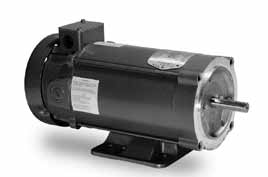
BALDOR DC MOTORS
Permanent Magnet and Shunt Wound DC Motors (90/180V up to 240/500V Armature)
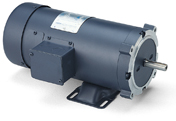
LEESON DC MOTORS
Permanent Magnet DC Motors including Washguard Dutyand Explosion Proof (90/180V Armature)
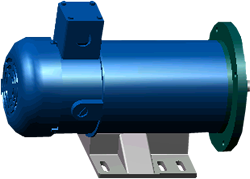
HALLMARK DC MOTORS
SCR Rated NEMA DC Motors (1/4 - 3 HP; 90V and 180V Armature)
DC Motor FAQs
1What is a DC motor and how does it work?
A DC motor is a machine that converts direct current (DC) electricity into mechanical rotation by using magnetic forces generated from a stationary outer magnet (the stator) and a rotating inner part (the armature). When these magnetic fields constantly push and pull against each other, it creates the torque that spins the motor.
2What is the most commonly used DC motor?
The most commonly used DC motor is the brushed DC motor because of its cost-effectiveness, ease of control and versatility. They use physical brushes, magnets and electricity to switch the current direction to keep the motor spinning.
While the brushed DC motor remains the most common, brushless DC (BLDC) motors are rapidly overtaking them in many modern applications because they are more efficient, have longer life spans and require little maintenance. However, the brushless DC (BLDC) motor is rapidly overtaking them in many modern applications.
While the brushed DC motor remains the most common, brushless DC (BLDC) motors are rapidly overtaking them in many modern applications because they are more efficient, have longer life spans and require little maintenance. However, the brushless DC (BLDC) motor is rapidly overtaking them in many modern applications.
3What are the types of DC motors?
DC motors are primarily categorized into two main families: brushed and brushless.
Brushed DC motors use carbon brushes to generate power to the spinning part of the motor. There are several subtypes of brushed DC motors that are defined by their wire type. Permanent magnet motors are most common in toys and automotive parts. Series, shunt and compound wound motors are used in industrial settings that require specific speed and torque control.
Brushless motors are overtaking as the modern standard for their high performance and reliability. They replace physical brushes with smart electronics to control the motor. This design is more efficient, has a longer lifespan and provides more precise control that is needed for modern applications.
Brushed DC motors use carbon brushes to generate power to the spinning part of the motor. There are several subtypes of brushed DC motors that are defined by their wire type. Permanent magnet motors are most common in toys and automotive parts. Series, shunt and compound wound motors are used in industrial settings that require specific speed and torque control.
Brushless motors are overtaking as the modern standard for their high performance and reliability. They replace physical brushes with smart electronics to control the motor. This design is more efficient, has a longer lifespan and provides more precise control that is needed for modern applications.